How to Increase Restaurant Average Order Value (Without Raising Prices)
Ask most operators how to grow revenue and the answer is more covers or higher prices. Both are hard. This guide covers the other route: raising what each table spends by changing what guests discover, what they are offered and whether they come back.
Start with the arithmetic
Average order value is the number of items a table orders multiplied by the average price of those items. Raising prices moves the second number. Everything in this guide moves the first, or brings the table back more often, without touching your price list.
Step 1: Measure a baseline first
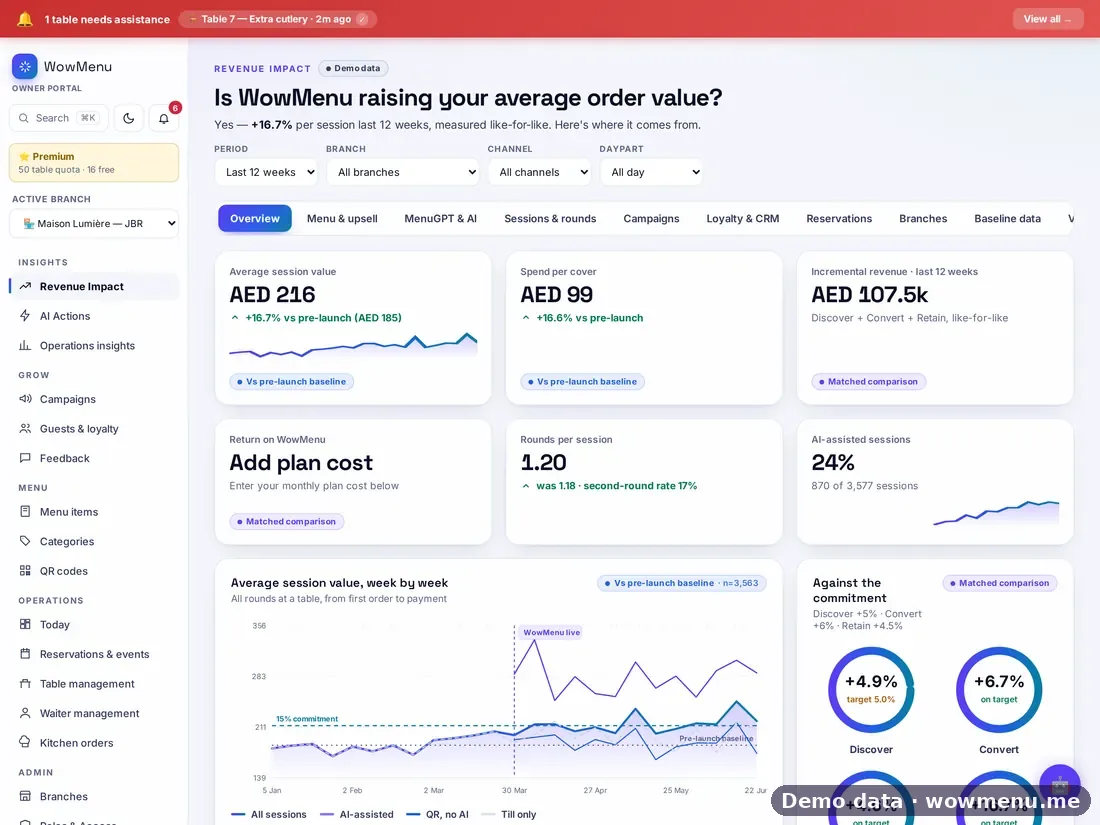
Before changing anything, record eight to twelve weeks of the numbers you want to move:
- Average bill per table, and spend per cover
- Items per cover
- Attach rates: the share of tables ordering a dessert, a drink or a side
- Second-round rate: how often a table orders again
- Repeat visits per guest
Compare like with like. A busy Friday should never be measured against a quiet Tuesday, so compare by day of week and daypart. Without a baseline, a good month looks like success even when it is just the season.
Step 2: Discover. Help guests find more to order
Guests order what they understand. A menu in their own language, clear descriptions, dietary and allergen filters and tags on every dish all reduce the defensive order, where a guest picks the one dish they recognise. Read why your menu should speak your guests' languages.
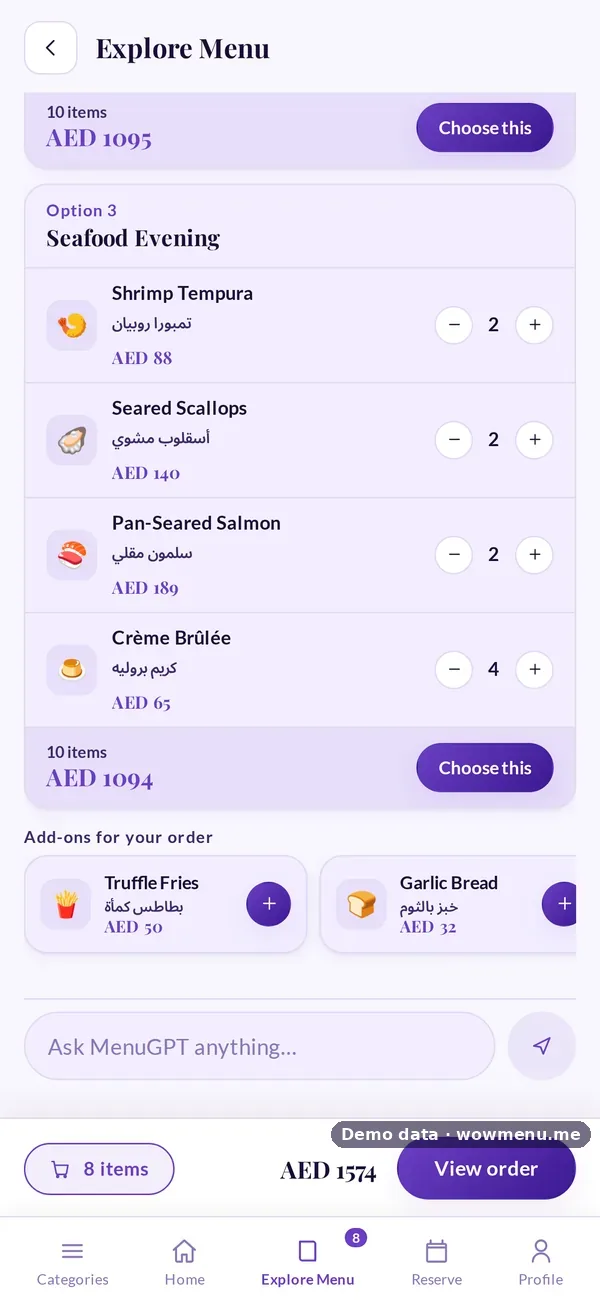
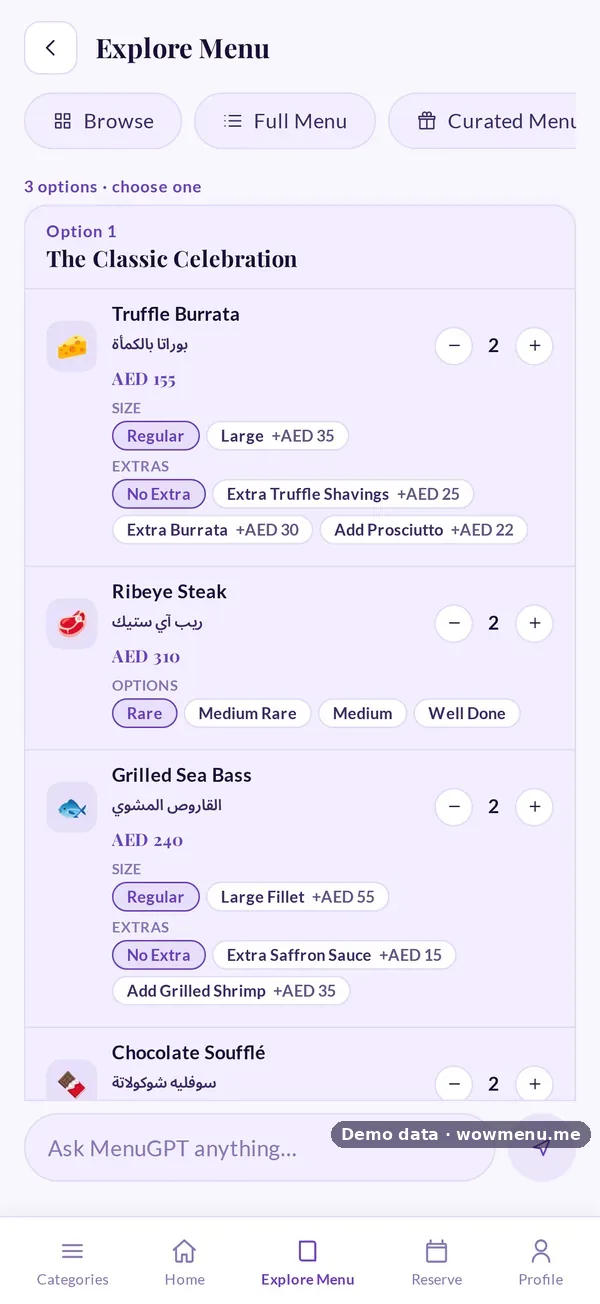
Recommendations do the rest. A good server suggests a starter for the table or a wine with the steak; a menu can do the same at every table. MenuGPT builds complete options sized to the party from your real menu.
Step 3: Convert. Suggest the right thing at the right moment
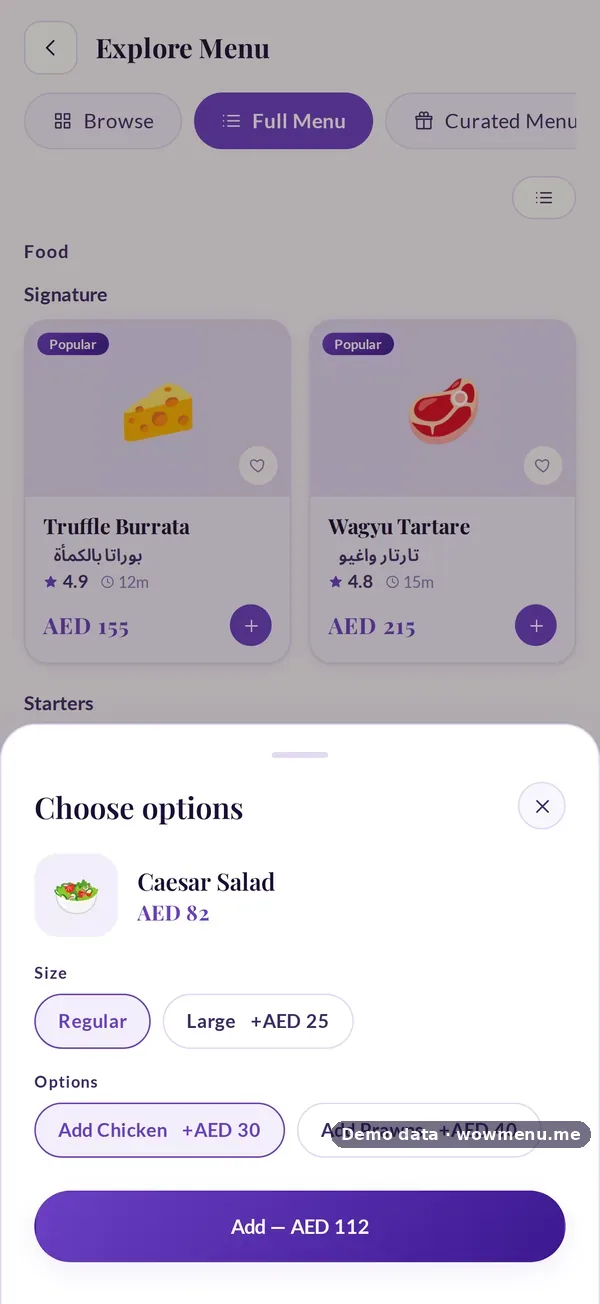
- Add-ons that genuinely go with the dish being ordered, from pairings you choose
- Set menus and combos that add a whole course in one decision
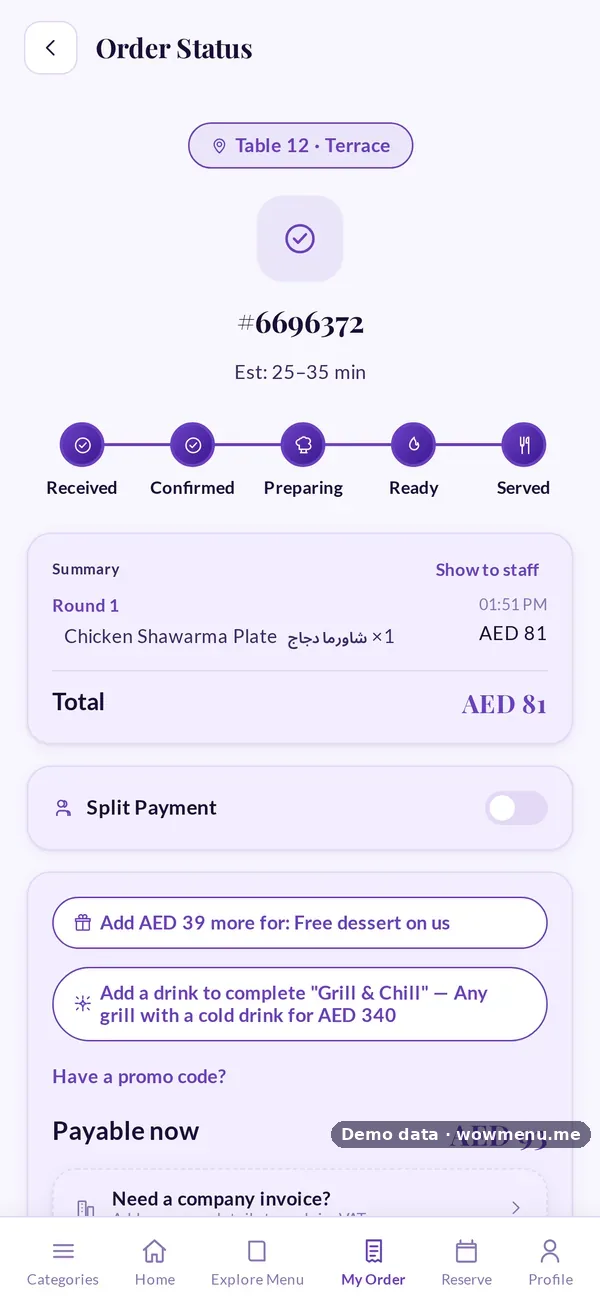
- A spend-and-get offer set just above your typical bill, shown as progress
- One well-timed suggestion when the order is close to a deal
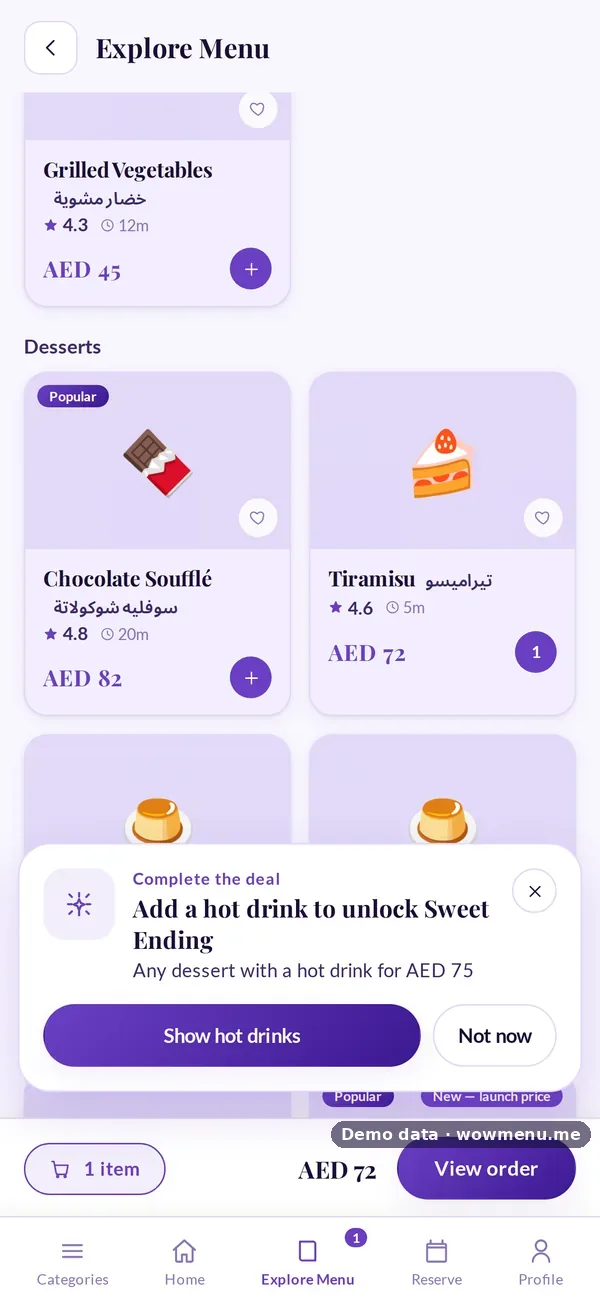
Restraint matters as much as the offer. Never interrupt checkout or payment, never repeat a declined suggestion, and space suggestions out. More in upselling techniques that work and combos, pairings and add-ons.
Step 4: Retain. Bring the table back
The guest who returns is the cheapest guest you will ever win. Points and tiers give a reason to come back, birthdays give a date, and win-back messages reach guests who have gone quiet. Judge "quiet" by each guest's own rhythm: a weekly regular missing for three weeks is a warning sign; a quarterly diner is not. Read how to win back lapsed guests.
What not to do
- Blanket discounts that every guest gets, whether or not they needed one
- Offers that apply to items or times you did not intend
- Upsells that interrupt guests while they are paying
- Changing five things at once, so you cannot tell what worked
A four-week test plan
Pick one change per stage: for example, MenuGPT for discovery, a dessert and hot drink combo for conversion, and a 60-day win-back message for retention. Run them for four weeks, compare each week with the same weeks in your baseline, and keep only what moved the numbers.

How WowMenu helps
WowMenu brings the three stages together: a multilingual digital menu with MenuGPT, add-ons, combos and campaigns at the moment of ordering, and loyalty and win-back afterwards. Revenue Impact compares each week with your pre-launch baseline, like for like, and splits any change into Discover, Convert and Retain, so you can see which lever earned its keep.