Who's slipping away, and what happens next
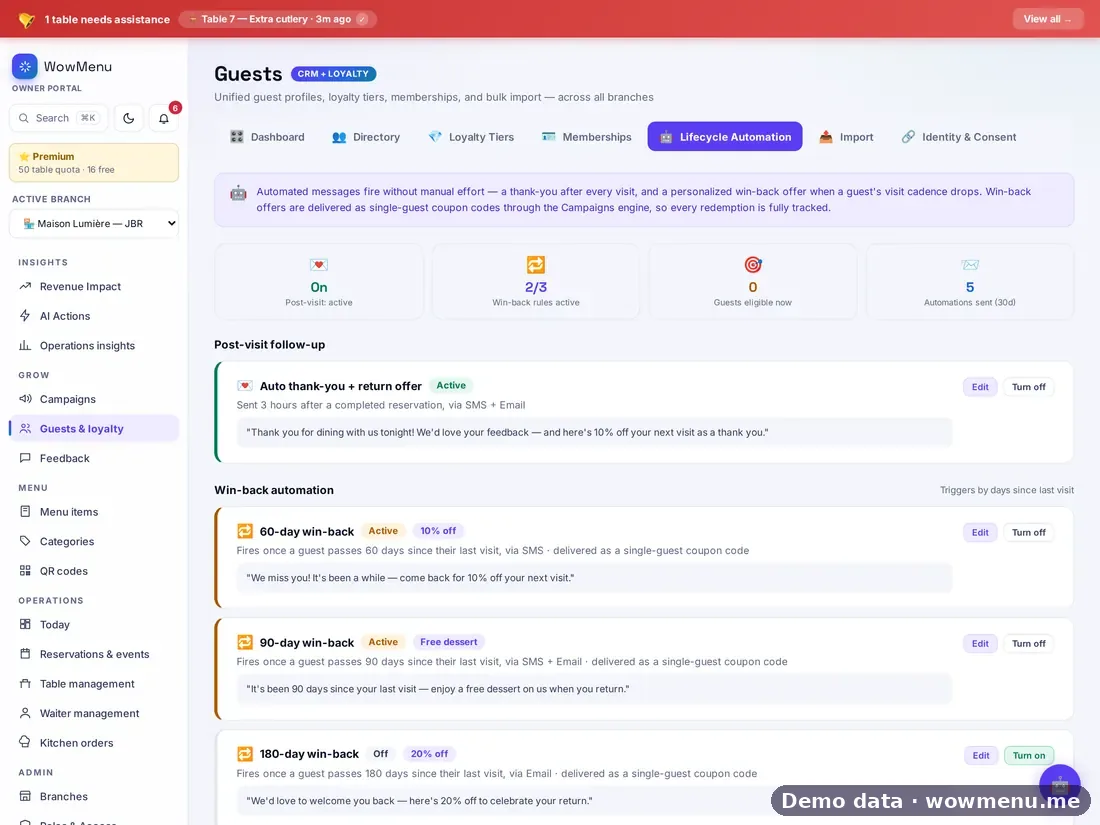
Lapse detection follows each guest's own rhythm, so a weekly regular is noticed sooner than a quarterly one. Then the messages take over. Offers shown are the demo restaurant's.
A post-visit thank-you with a return offer.
10% off, as a single-use coupon.
A free dessert, as a single-use coupon.
20% off, as a final single-use coupon.
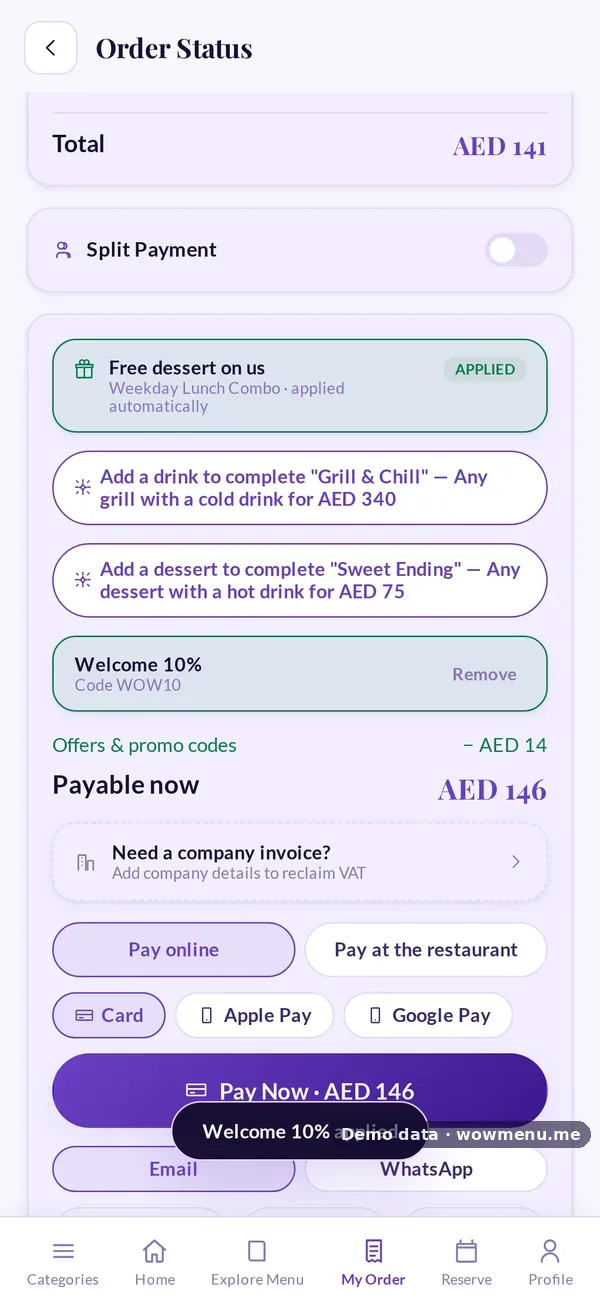
The message carries a coupon, and the guest redeems it at the table
The owner sets the sequence once. The guest redeems the coupon at payment, and the coupon history shows when it was used.

Lapse detection that knows your regulars
Lapse detection follows each guest's own rhythm, so a weekly regular who goes quiet is noticed sooner than a quarterly diner.
Win-back that runs on its own
A post-visit thank-you, then messages at 60, 90 and 180 days, each with its own single-use coupon, by SMS or email to guests who opted in.
Loyalty and campaigns in the same place
Points, tiers, streaks and eight campaign types, all measured, with Revenue Impact showing what retention adds against your baseline.
What would a small uplift be worth to you?
Move the sliders to your own numbers. The point is not our figures — it is how little the uplift has to be before the subscription pays for itself.
5% is a deliberately conservative default. Your own number is the one that matters, and you can change it.
An estimate based on the figures you entered, not a forecast or a guarantee. Actual results depend on your menu, your guests and how the platform is set up.
Frequently asked questions
It compares each guest with their own visit rhythm rather than a fixed number of days.
After a thank-you, at 60, 90 and 180 days, each with a single-use coupon.
Yes. Marketing messages go to guests who opted in, and the consent box starts unticked.
Win-back automation is on Suite, at £349 a month, after a 30-day free trial.